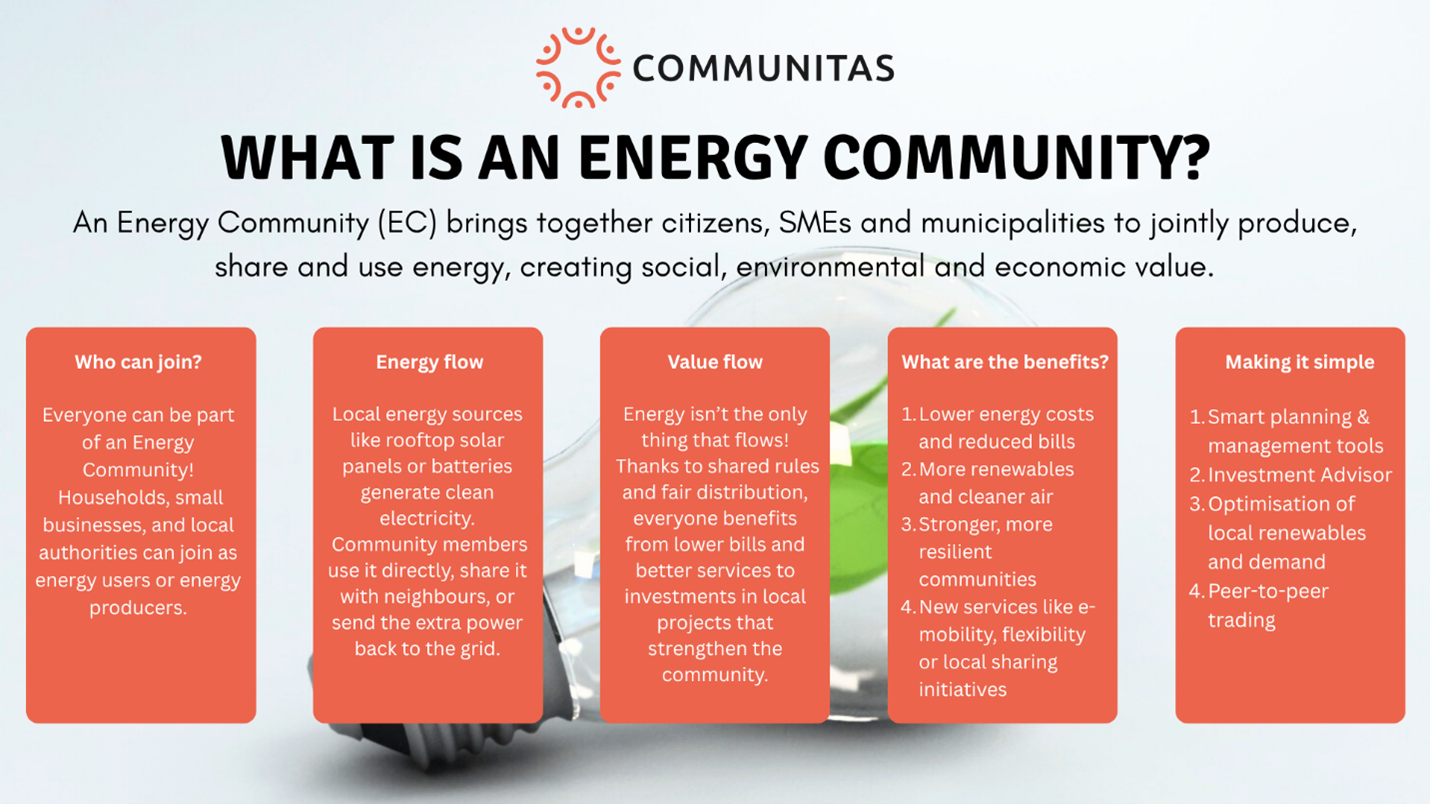
An energy community is a collaborative initiative where a group of individuals, businesses, and local authorities join forces to produce, manage, share, and consume renewable energy. These communities are designed to enhance local energy resilience, reduce carbon footprints, and foster sustainable energy practices. The concept of an energy community is rooted in the idea of collective ownership and democratic governance, allowing members to participate actively in decision-making processes and share the benefits derived from renewable energy projects.
FAQs
Energy Communities are means to produce and share renewable energy among various people or entities. In this model, citizens, companies or public institutions come together to consume energy produced locally. In an open and voluntary participation, neighbors with self-consumption generators come together, produce energy, consume what they need and share the rest. This energy can be stored, shared with other members or sold.
Energy communities can take various forms, including:
oCooperatives: Member-owned organizations that operate on a democratic basis, with each member having an equal say in decision-making.
oAssociations: Non-profit entities focused on mutual benefits for members, often emphasizing community engagement and advocacy.
oCommercial Societies: Business-oriented entities that aim to generate profits while achieving renewable energy goals.
oPublic-Private Partnerships: Collaborations between local governments and private companies to develop and manage renewable energy projects.
While energy communities offer many benefits, they also face several challenges, including:
oInitial Funding: Securing the necessary funding to start and scale renewable energy projects can be challenging.
oRegulatory Hurdles: Navigating complex regulatory requirements at the local, national, and EU levels can be time-consuming and require specialized knowledge.
oTechnical Expertise: Implementing and managing renewable energy systems require technical expertise, which may not always be readily available within the community.
oMember Engagement: Ensuring active and sustained engagement from all members can be challenging, particularly in larger or more diverse communities.
The main goal is to deliver environmental, economic, or social benefits to its members and the local area, rather than maximizing profit.