Meet our Energy Communities

Crevillent, Spain

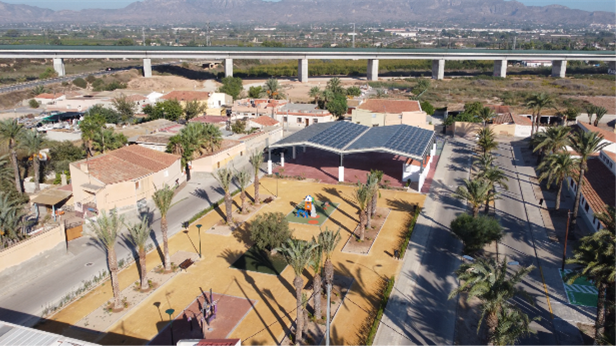
<p>COMPTEM (Community for Municipal Energy Transition) is a project promoted by the Enercoop Group, with the support of Crevillent City Council. Its aim is to address the challenge of energy transition at the municipal level and transform the municipality of Crevillent, with a population of 30,000, into a benchmark energy community at the national and European levels. In this community, consumers, the citizens themselves, can benefit from the advantages of the collective and shared use of energy produced from renewable sources, thus becoming prosumers.</p>

Lavarone, Italy

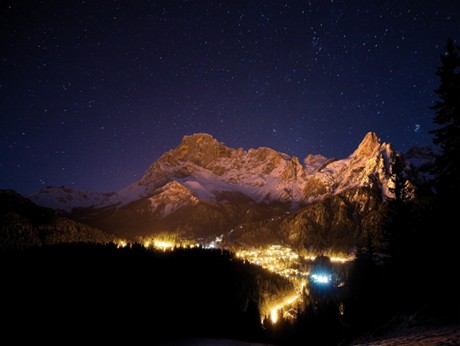
<p>The new Renewable Energy Community Green Land will operate in the Alpe Cimbra area by networking economic, social and cultural operators to promote not only energy sustainability, but also the economic and social sustainability of the entire local district. Formed thanks to the commitment of about fifty members, including also the Municipality of Lavarone and the cooperative realities of the area, Green Land is particularly characterized by being a community cooperative and therefore aims to build through the cooperative spirit re-actualized in the territory, a series of welfare projects and other activities that will bring many returns, including economic. The project required the development of a tailor-made path, carried out with the contribution made available by Regional Law No. 15/1988 “Promotion and development of cooperation, education and cooperative spirit” and the advice of the Federation's Legal Department and Facilities and Financing/CAT Office.</p>

Groningen, Netherlands

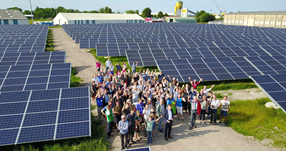
<p>The Buurtwarmte Groningen EC is located in the municipality of Groningen, in north of the Netherlands. The demonstration region covers three districts located in the city of Groningen, Selwerd, Paddepoel, and Vinkhuizen. The region is characterised by its temperate oceanic climate (Cfb), the most common climate type in Western Europe. The local EC participating in the Buurtwarmte pilot site has about 2.000 members in total, about 1.150 members are using electricity and gas; 100 members are using Grunneger Power EV charging stations; 1.000 members contribute to energy production through PV generation. The heat network (run on natural gas) is a focal point of this EC with an annual heat demand of over 39 GWh.</p><p>Part of the EC participates in H2020 Making City as part of a retrofit plan for achieving positive energy districts. The site has also been part of several nationally and government funded projects with a focus on heat network development, reducing energy consumption, the development of gas-free neighbourhoods and the development of energy district strategies. The current goal for Grunneger Power is to further develop its own production and storage (PV and heat sources), to reduce its members’ energy consumption, and to educate energy coaches.</p>

Cascais, Portugal

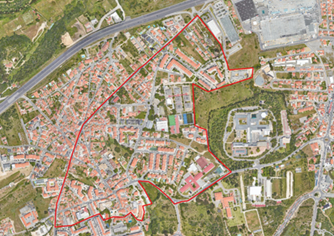
<p>Cascais pilot is located in the municipality of Cascais in Portugal. Cascais is a town located a few kilometres west of Lisbon, being the most western region in mainland Europe. The region is characterised by its Mediterranean warm-summer climate (Csb).</p><p>Cascais pilot comprises 60 households and some schools/public municipal buildings. Pilot’s main goal is to provide RES to a social neighbourhood by using the rooftops of local schools and sports infrastructures to install PV. The energy generated will be distributed fairly across the EC members, aiming to reduce energy bills for vulnerable families. In COMMUNITAS, Cascais will be able to develop further tools for the community under development, helping to support its management. The pilot aims to provide a visual interface to prosumers, alerting for both energy consumption and production in each period and generating a reward mechanism to increase collaboration between pilot members.</p>

Hvalsø, Denmark

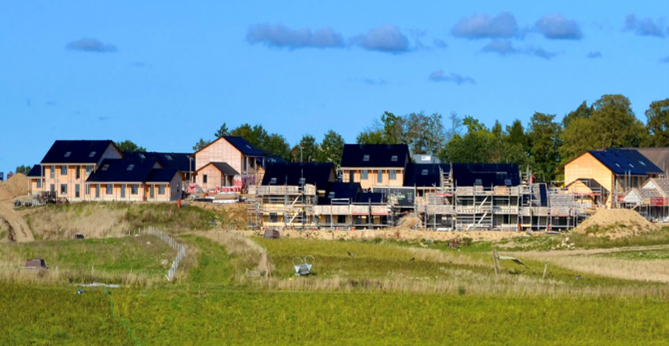
<p>The Danish pilot case “Hyldegaard Høje” was finished in 2025 and was legally established as an Energy Community in 2024. The COMMUNITAS project is connected to this first housing group, “Sjællands Muld” (with 35 housing units), through measurement and testing activities. The community has a thermal grid heating system based on a geothermal heat source exploited through heat pumps, and has its electricity supply from local PV systems and the grid. Next to this first group, there are smaller energy communities in the countryside.</p>

Halkidiki, Greece

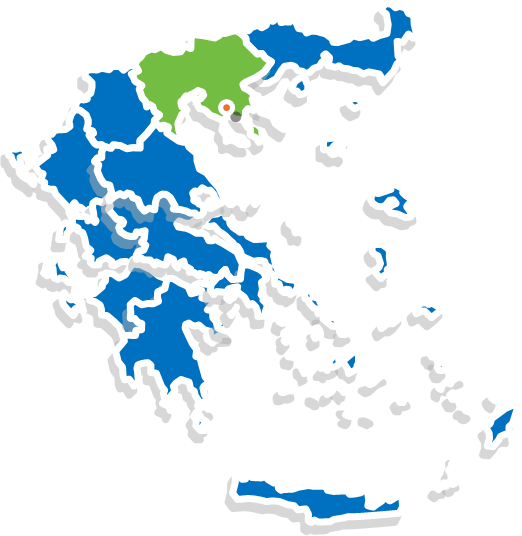
<p>The Halkidiki pilot is located in the Halkidiki peninsula, near Thessaloniki, in Greece. The region has hot-summer Mediterranean climate (Csa) near shore, but also a cold semi-arid climate (BSk) inland.</p><p>The pilot is constituted by 50 residential buildings and some retail/commercial buildings. The prevailing economic sector of Halkidiki is represented by summer tourism, as Halkidiki Peninsula is the most popular summer destination in Northern Greece. The pilot was set up in 2018, having participated in H2020 enCOMPASS and inteGRIDy as a demonstration site, with highly engaged consumers. The main objective of enCOMPASS was to empower consumers to make better decisions regarding EE and in inteGRIDy was to access the potential for flexibility at residential level using DR and local storage. The main motivation for the integration of this demonstrator is aligned with the creation of an EC and DR schemes including eMob (a DR scheme for eMob utilising PV over car sheds with Battery Energy Storage Systems to foster EV charging stations).</p>

Useful links to know more about other Energy Communities:

  • Telheiras Renewable Energy Community
  • Other ECs in the selected country. Short description: Lorem ipsum dolor sit amet, consectetur adipiscing
  • Other ECs in the selected country. Short description: Lorem ipsum dolor sit amet, consectetur adipiscing